At 22:14 local time on a clear March evening from a Bortle Class 8 city center, a naked-eye observer will resolve Sirius at apparent magnitude −1.44, Canopus at −0.62, Arcturus at −0.05, Rigil Kentaurus at −0.01, Vega at 0.03, and Capella at 0.08. The Milky Way, whose integrated surface brightness sits near magnitude 22 per square arcsecond, will not appear. Artificial sky glow in that setting brightens the background by roughly a factor of fifty over a rural baseline. Six stars survive because they are point sources. The galaxy is diffuse, and diffuse light is the first thing a city erases.
The strongest counter-argument is worth naming. Cities that swapped high-pressure sodium for narrow-band 4000K LEDs, the argument runs, produce less total upward flux per lamp and therefore less integrated sky glow; averted vision, dark-adapted over forty minutes on a balcony shielded from direct lamp glare, ought to recover something. In practice the LED transition traded warm broadband skyglow for a colder spectrum that scatters more efficiently in the blue, and forty minutes of dark adaptation in an urban courtyard rarely brings the rod-mediated visual system below the ambient scattered background. The verdict holds. What follows is the machinery underneath it.
Sky Background Brightness Is the Variable That Actually Decides This
The night sky has a floor brightness even at a genuinely dark site. The natural background — airglow in the upper atmosphere, zodiacal light along the ecliptic, unresolved starlight and faint galactic background — sums to roughly magnitude 21.9 per square arcsecond at a moon-free rural site near the zenith. That is the number against which every other sky is measured. The Milky Way, seen edge-on across the sky, adds an integrated brightness that rises toward the galactic plane and reaches something close to that same magnitude-22-per-square-arcsecond band where the galactic bulge crosses through Sagittarius.
That near-equivalence is the whole story. In a rural sky the Milky Way sits about one magnitude above the local background, and the human eye's ability to detect low-contrast extended features tops out at roughly that threshold. Push the background brighter by a factor of ten — a small town, Bortle 5 — and the Milky Way surface brightness has not changed, but the contrast collapses. Push it by a factor of fifty — a Bortle 8 city center running mixed LED and mercury-vapor lighting — and the galaxy is now buried a magnitude and a half below the background. The eye, which reads contrast rather than absolute brightness, sees nothing where the galaxy is.
Sirius, at apparent magnitude −1.44, delivers roughly 100,000 times the flux of a magnitude 6 star into a single photoreceptor. That flux ratio is preserved whatever the background does; the background merely raises the noise floor. As long as the star's photon flux clears that floor, the star remains visible as a discrete point. A background fifty times brighter than rural still leaves a magnitude 0 star four to five magnitudes above threshold. The galaxy, whose signal is spread across the whole retina, has nothing analogous to spend.
Point Sources Survive; Diffuse Light Loses First
The physics separating point sources from diffuse sources is not subtle. A star is unresolved by the human eye. Its light arrives inside a diffraction-limited angular spot roughly one arcminute across, set by the pupil rather than the star. The eye is asked whether one small patch of sky is brighter than the patches around it. That question has a clean signal-to-noise answer: the star wins as long as its integrated flux over that spot exceeds the background noise inside the same solid angle.
Diffuse sources reverse the arithmetic. The Milky Way is not brighter than the sky in any single square arcsecond by very much — perhaps 0.1 to 0.5 magnitudes at its brightest, and often less. It is visible only because that small excess extends across tens of degrees, and the visual system integrates the contrast over that whole extended region. Raise the sky background and that per-arcsecond contrast excess shrinks in absolute terms — the visual system's contrast-detection threshold does not shrink with it. There is no averted-vision trick that recovers a signal you have driven below threshold across the entire retina.
| Source | Type | Brightness figure | Behavior in Bortle 8 |
|---|---|---|---|
| Sirius (CMa) | Point | m = −1.44 | Visible; ~5 mag above threshold |
| Canopus (Car) | Point | m = −0.62 | Visible where declination permits |
| Arcturus (Boo) | Point | m = −0.05 | Visible |
| Rigil Kentaurus (Cen) | Point | m = −0.01 | Visible where declination permits |
| Vega (Lyr) | Point | m = 0.03 | Visible |
| Capella (Aur) | Point | m = 0.08 | Visible |
| Milky Way (integrated) | Diffuse | ~22 mag / arcsec² | Below threshold |
| Rural natural sky | Diffuse background | ~21.9 mag / arcsec² | — |
| Bortle 8 urban sky | Diffuse background | ~18 mag / arcsec² | — |
The magnitude scale is logarithmic — each five magnitudes corresponds to a factor of 100 in flux. The four magnitudes separating a rural background from a Bortle 8 background is a factor of roughly forty in surface brightness. The six stars in the grounding table sit between magnitudes −1.44 and 0.08, a range spanning a factor of about four in flux among themselves and staying at least twenty magnitudes above the urban background per unit area they occupy. The galaxy is not competing on the same axis.
The Bortle Scale Measures What Your Eye Has Already Lost
John Bortle's nine-class scale, published in 2001, is a field taxonomy of what the naked eye sees under different sky brightnesses. It is calibrated by observation rather than by lux meter, and its class boundaries correspond roughly to specific losses. Class 1 is the inky, moonless rural sky where the zodiacal light casts a shadow and the Milky Way projects visible structure. Class 4 is a rural-suburban transition where the Milky Way still shows its main lanes. Class 6 is bright suburban — the Milky Way is visible only near the zenith, and its detail is gone. Class 8 is city center, and the scale states plainly that the Milky Way is invisible.
Each step up the scale corresponds to roughly a magnitude of added background brightness — that is, a factor of 2.5 in surface luminance. A jump from Class 4 to Class 8 is four magnitudes, or a factor near forty in background, which is the same order-of-magnitude figure derived from measurements taken with sky-quality meters across urban gradients over the last two decades. The scale is not a metaphor. It maps to photometry.
What the Bortle scale hides is that class assignment is a running tally of losses, and by the time you notice the loss you care about, several earlier losses have already occurred. Between Class 3 and Class 4 the reader loses the visibility of galactic dark lanes. Between Class 5 and Class 6 the reader loses the Milky Way itself. Between Class 6 and Class 7 the reader loses the Andromeda Galaxy without averted vision. Somewhere between Class 7 and Class 8 the fainter naked-eye stars — magnitudes 4 and 5 — begin to drop out, and only the constellation skeleton remains. The six stars in this article's opening are the residual of that skeleton for a mid-northern latitude in March. They are not evidence that the sky is fine. They are evidence of how much has already been lost that Sirius and Vega alone still punch through.
The Drive to a Genuinely Dark Sky Is Shorter Than the Forecast Suggests
The practical arithmetic favors the traveler. Sky brightness falls off with distance from a light dome faster than most residents assume, because the source geometry is dominated by scattering off aerosols and water vapor in the lower troposphere, and that scattering falls with the inverse square of distance plus an atmospheric attenuation factor. Beyond about 60 kilometers from a large city's edge, and 30 kilometers from a mid-sized city's edge, the local sky background typically drops from Bortle 8 through Bortle 4 and touches Bortle 3, where the Milky Way returns as a structured, high-contrast feature rather than a rumor.
The New World Atlas of Artificial Night Sky Brightness, published in 2016 and periodically updated with VIIRS satellite data, is the reference document. Its maps translate satellite radiances into sky brightness at ground level and are searchable by coordinate. Cross-checking a candidate site against the atlas takes under a minute and produces a Bortle-class estimate accurate to within one class in most cases. Dark-sky reserves and parks certified by DarkSky International — of which there are now more than 200 globally — provide destination-grade skies of Class 2 or Class 1, though most observers do not need to travel that far to recover the galaxy.
There is a subtler point about timing. Midnight to two in the morning are the hours when a city's commercial lighting load falls and the local background can improve by half a magnitude. Winter months, colder and drier air, and low humidity all reduce the scattering efficiency of the aerosol layer. A Bortle 6 site on a humid August evening can behave like a Bortle 4 site on a dry January night at the same coordinate. The dark-sky question is not only where; it is when, and the atmosphere runs its own accounting.
What You Should Actually Do
Start with the atlas. Pull up lightpollutionmap.info or the equivalent, drop a pin on your address, and read the SQM (sky quality meter) or Bortle estimate at that pixel. Then draw a 60-kilometer circle and find the closest point on the map where the class drops to 4 or below. That point, more often than a resident of a top-30 metropolitan area expects, is within a two-hour drive. Save it. Note the driving distance and the elevation — sites above 500 meters gain roughly half a magnitude from thinner atmosphere and a lower aerosol column. Cross-check the position against a forecast that includes cloud cover and transparency (Clear Outside and Meteoblue's astronomy layer are the two we use); schedule the visit for a night within three days of new moon, arrive before astronomical twilight ends, and give the eye forty minutes without looking at any white-light screen.
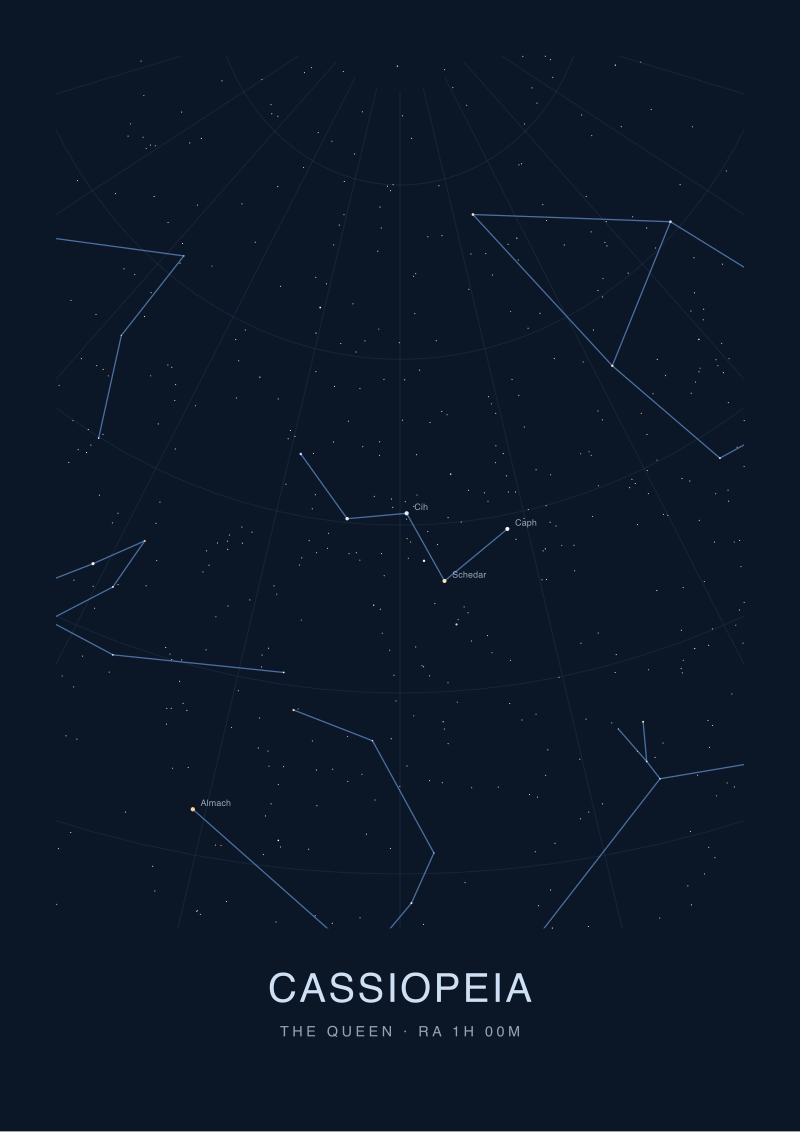
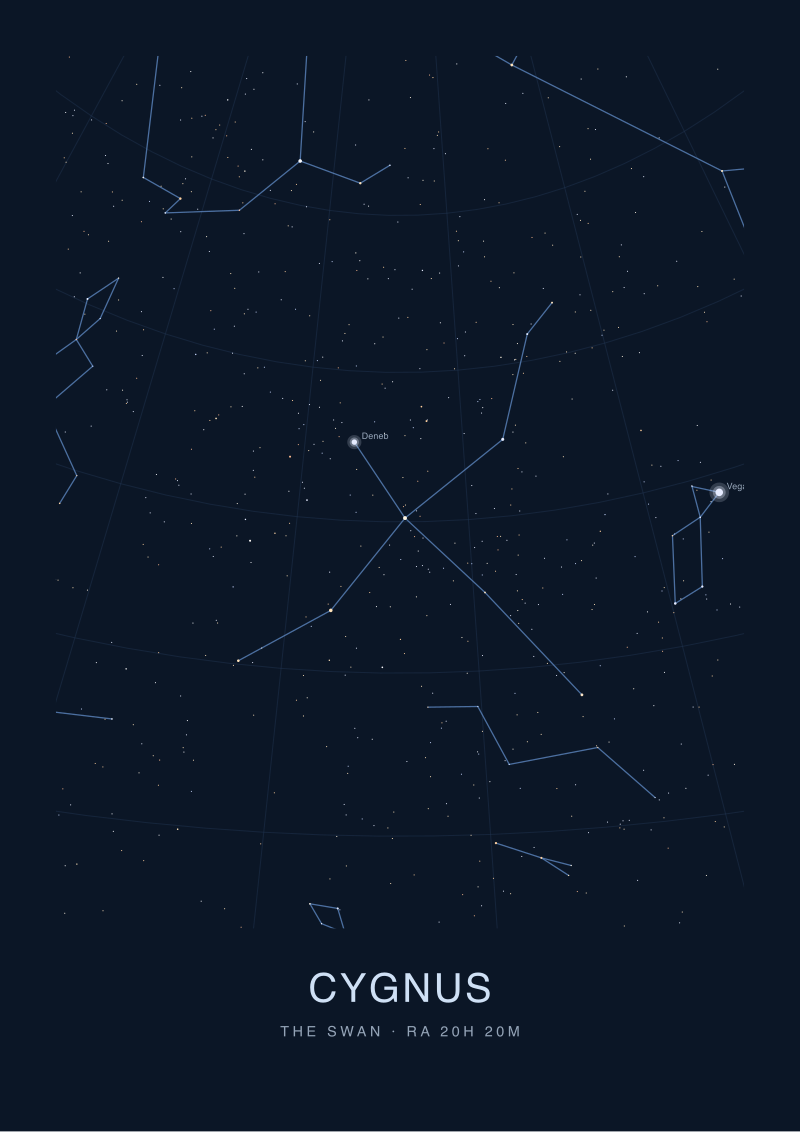
Bring nothing more than a red flashlight, warm clothing, and a printed chart oriented to the local date and hour. The six stars in the opening paragraph are the ones you use to confirm you are looking at the sky your chart expects — Sirius and Canopus low in the southwest at March, Arcturus rising in the east, Vega and Capella arcing across the north. Once those anchors resolve, look toward Sagittarius (summer) or Cygnus and Cassiopeia (August through October, when the galactic plane runs high overhead in the northern hemisphere) and let the eye find the diffuse band. It will not look like a photograph. It will look like a paler, slightly structured stripe of sky, brighter than the surroundings by less than a magnitude per square arcsecond. That is the correct appearance. The photograph you have seen was a thirty-second exposure at ISO 6400 through an f/2 lens, and the eye is not that camera. The eye is, however, sufficient — under the right sky — to see what it is that the city has been hiding.
Watch four indicators when planning a run to darker sky. First: the moon phase, targeting the window three days before to three days after new moon. Second: the atmospheric transparency forecast, which is a separate variable from cloud cover and tracks aerosol and humidity load. Third: the local SQM reading at your candidate site, either from lightpollutionmap.info or from the readings that certified dark-sky parks publish. Fourth: the galactic core's altitude at your intended observation time — in the northern hemisphere the core is only above the horizon from roughly February through October, and only usefully high from May onward. Miss any one of those and the trip still produces a beautiful sky. Land all four and you see the galaxy.
 Cassiopeia
The print from this article · from €29.95
View the print →
Cassiopeia
The print from this article · from €29.95
View the print →
 Cygnus
The print from this article · from €29.95
View the print →
Cygnus
The print from this article · from €29.95
View the print →
From the collection
New charts and 10% off your first print.
One email now with your code. No noise after.